
10 Community Participation Activities You Can Access with Your NDIS Funding
You've got community participation funding in your NDIS (National Disability Insurance Scheme) plan. You know it's there to help you get out, connect with people, and build skills. But when it comes to actually deciding what to do with it, the options can feel overwhelming — or strangely unclear.
You're not alone in that. Many participants tell us they weren't sure what counted as "community participation" or what activities their funding could support. The truth is, there's more variety than most people realise. From cooking classes to community gardens, from music sessions to volunteering, many participants use their community participation funding for activities that genuinely change the shape of their week.
Here's a look at 10 activities worth exploring.
A Quick Note on How This Funding Works
Before we get into the list, it helps to understand where community participation sits in your plan. There are two main areas where it can show up.
The first is Core Supports, under "Assistance with Social, Economic and Community Participation" (Category 4). This funding helps you access activities right now — a support worker accompanying you to a class or community event, for instance.
The second is Capacity Building, under "Increased Social and Community Participation" (Category 9). This is about building your skills and confidence so that over time, you can participate more independently.
Both categories can support the activities below, depending on how your plan is structured and what your goals are. Every NDIS plan is different, and all supports need to meet the "reasonable and necessary" criteria. We'd always recommend checking with your support coordinator or plan manager before committing to a new activity.
1. Adapted Sports
Sport is one of the most effective ways to build confidence, routine, and social connection all at once. Many participants access adapted sports programs like wheelchair basketball, bocce, seated volleyball, or athletics through local clubs and disability sport organisations.
In NSW, groups like Sport NSW and local council recreation programs run adapted sport sessions across Sydney, the Hunter, and regional areas. These programs are designed to be inclusive from the ground up, not an afterthought. For participants whose NDIS goals include physical health, social connection, or building independence, adapted sport can tick several boxes at once.
2. Creative Workshops
Art has a way of opening doors that conversation alone sometimes can't. Creative workshops — pottery, painting, textile arts, woodworking — give participants a structured, social environment where the focus is on making something, not on disability.
Many community centres and neighbourhood houses in NSW run accessible creative programs. The key here is that you don't need to be "artistic" to benefit. The value is in the process: problem-solving, fine motor skills, self-expression, and the quiet satisfaction of finishing something you made with your own hands. These activities often align with capacity building goals around communication, confidence, and daily living skills.
3. Cooking Classes
Learning to cook is one of the most practical skills a person can build. It touches on independence, nutrition, safety awareness, budgeting, and even social connection when you're cooking alongside others.
Many participants use their community participation funding to attend group cooking classes at community centres, TAFE programs, or disability-specific cooking programs. Some participants work with a support worker in their own kitchen to build meal preparation skills at their own pace. In both cases, the activity connects directly to NDIS goals around daily living and independence — two of the most common goal areas in participant plans.
4. Library Programs
Public libraries are some of the most accessible and welcoming community spaces in Australia, and most people don't realise how much they offer beyond books. NSW public libraries run reading groups, digital literacy workshops, creative writing sessions, language classes, and sensory-friendly story times.
For participants working toward goals around literacy, communication, or social connection, library programs are a strong option. They're free, they're local, and they're designed to be inclusive. Many libraries in the Sydney and Greater Western Sydney area have accessibility officers who can help match you with the right program.
5. Cultural Outings
Museums, galleries, live performances, festivals, and cultural events are all examples of community participation that many people overlook in their NDIS plans. These aren't just "nice to have" outings. For participants whose goals include community access, social skills, or sensory regulation, cultural experiences can be genuinely meaningful.
In NSW, venues like the Art Gallery of NSW, the Australian Museum, and the Sydney Opera House all have accessibility programs and many offer free or discounted entry for NDIS participants and their support workers. Regional galleries and community theatres are often just as welcoming. The goal isn't just attendance — it's the conversation on the way home, the new interest sparked, the sense of belonging in a shared cultural experience.
6. Volunteering
Volunteering is a powerful way to build purpose, routine, and work-ready skills. Many participants use their community participation funding to access support while volunteering at animal shelters, op shops, community gardens, food banks, or local events.
According to Volunteering Australia's 2025 State of Volunteering report, structured volunteering programs can improve social connectedness and mental wellbeing, particularly for people who face barriers to traditional employment. For NDIS participants, volunteering can align with goals around employment readiness, social participation, and building confidence in real-world settings. The key is finding a role that matches your interests and capacity, not just filling a spot.
7. Music Programs
Whether it's learning an instrument, joining a choir, or attending a drumming circle, music programs offer a unique combination of cognitive stimulation, emotional expression, and social connection. Music doesn't require verbal fluency, which makes it particularly valuable for participants with communication support needs.
Community music programs are available across NSW through organisations like the Accessible Arts network and local council arts programs. Some participants work one-on-one with a music therapist, while others prefer the energy of a group session. Either way, music programs can support goals around communication, sensory processing, confidence, and social connection.
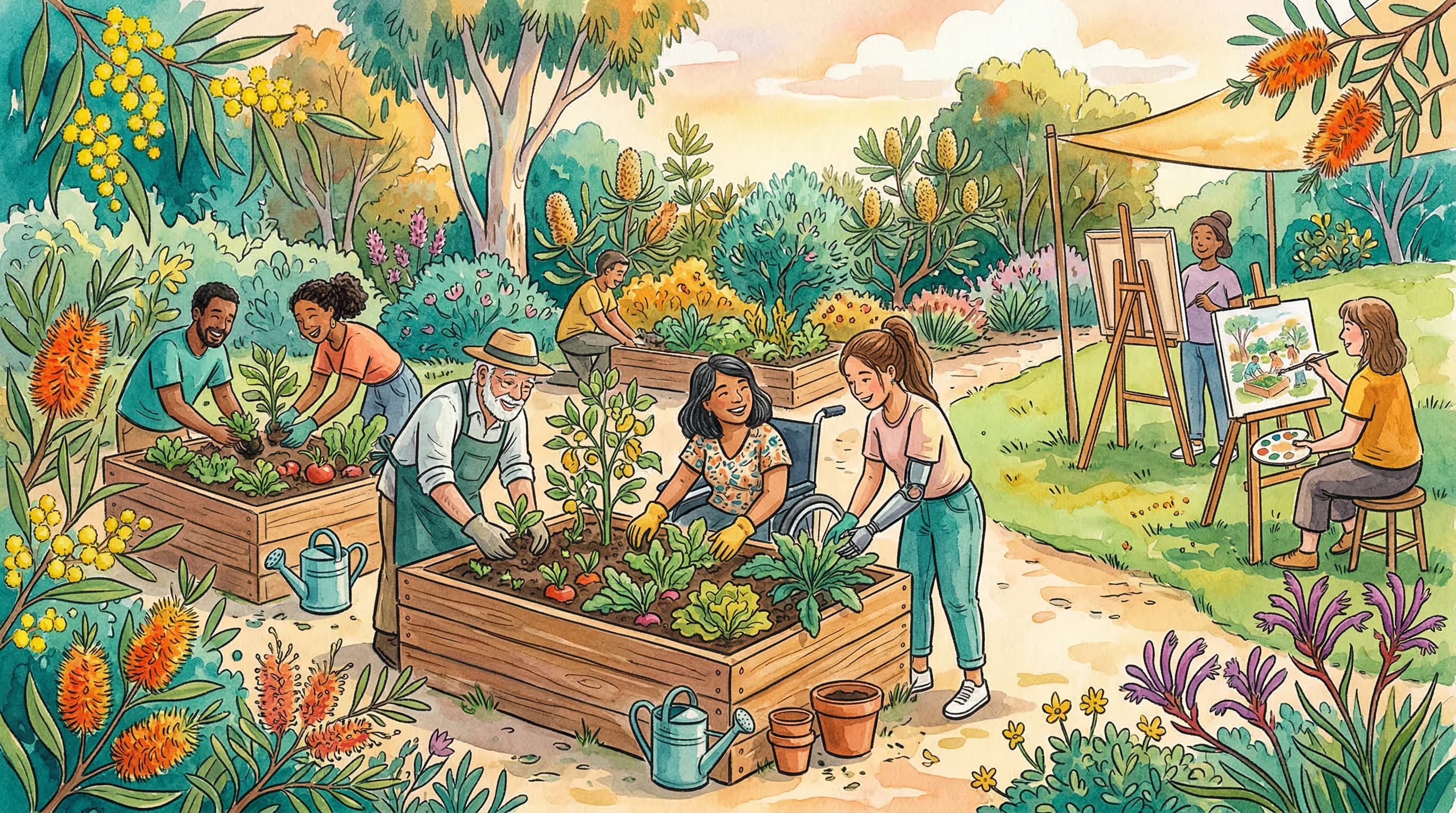
8. Gardening Groups
There's solid evidence that gardening supports mental health, physical activity, and social connection. Community gardens are popping up in suburbs and towns across NSW, and many are designed with raised beds and accessible pathways that make them welcoming for people with mobility needs.
Gardening groups give participants a regular commitment, a reason to be outdoors, and a tangible result they can see grow over weeks and months. For participants whose goals include routine building, sensory engagement, or community belonging, a local garden plot can be surprisingly transformative. Councils across Greater Sydney, the Illawarra, and the Central Coast run community garden programs, and many welcome NDIS participants with open arms.
9. Swimming and Water Activities
Water-based activities — swimming laps, hydrotherapy, learn-to-swim programs, kayaking, or even fishing — are among the most popular community participation activities for NDIS participants. Water provides a low-impact environment that supports physical health, sensory regulation, and relaxation.
Many aquatic centres in NSW offer accessible facilities including hoists, ramps, and changing places. Programs like the Royal Life Saving Society's inclusive swimming initiatives are available across the state. For participants with goals around physical health, daily living skills, or building independence, regular water-based activity can become a cornerstone of their weekly routine.
10. Social Groups
Sometimes the simplest activity is the most important one. Social groups — board game meetups, coffee catch-ups, trivia nights, book clubs, walking groups — give participants a regular, low-pressure opportunity to practise social skills and build friendships.
Loneliness and social isolation are significant challenges for many people with disability. The NDIS Quality and Safeguards Commission has highlighted the importance of social connection as a foundation for wellbeing and quality of life. Social groups can support goals around communication, emotional regulation, community access, and building the confidence to engage with new people in new settings. Many disability service providers in NSW, including community-based organisations and local councils, run structured social groups specifically designed to be inclusive and supportive.
Before You Sign Up: A Few Things to Keep in Mind
Every NDIS plan is individual. The activities on this list are examples of what many participants access through their community participation funding, but whether a specific activity is funded for you depends on your plan, your goals, and whether it meets the NDIS "reasonable and necessary" criteria. That phrase comes up a lot in the NDIS, and in simple terms it means the support must be related to your disability, represent value for money, and help you pursue your goals.
Before starting a new activity, talk to your support coordinator or plan manager. They can help you work out whether the activity fits within your current plan, which budget category it falls under, and whether you need a support worker to attend with you.
It's also worth knowing that the NSW Government's Disability Inclusion Plan 2026-2029, launched in December 2025, is driving local councils and government agencies to improve community accessibility and develop Disability Inclusion Action Plans. That means the landscape of accessible community activities in NSW is actively expanding.
The Bigger Picture
Community participation isn't a line item. It's the difference between staying home and being part of something. It's the Tuesday morning pottery class that becomes the highlight of your week. It's the volunteer shift that gives you a reason to set an alarm. It's the swimming session that helps your body and your mind at the same time.
Your NDIS plan exists to support the life you want to live. If community connection is part of that picture — and for most people, it is — then exploring what's available in your area is time well spent. Start with one activity. See how it fits. And remember, your support coordinator is there to help you figure out the details.
We're here too. If you'd like to talk about how Cynosure can support your community participation goals, reach out to our team. We'd love to hear what you're interested in.