
Everyday Assistive Technology: Low-Cost Items That Can Make a Big Difference
The Small Things That Shape Your Day
Think about the first ten minutes of your morning. You get out of bed, walk to the bathroom, turn on the shower, get dressed, head to the kitchen. For most people, these steps barely register. But when any one of them becomes difficult or unsafe, it changes everything.
That is where assistive technology comes in — and it does not always mean expensive, high-tech equipment. Some of the most useful items cost less than a good pair of shoes, and they can genuinely transform how you move through your day.
If you are an NDIS participant, many of these items may already be covered under your plan. The challenge is knowing what is out there, what counts as assistive technology, and how to access it. That is exactly what we are going to walk through.
What Counts as Assistive Technology?
The NDIS (National Disability Insurance Scheme) defines assistive technology as any device or system that allows a person to perform tasks they would otherwise be unable to do, or that increases the ease and safety with which those tasks can be performed. According to the NDIS, this spans everything from simple grab bars to complex powered wheelchairs.
Here is where it gets a little nuanced. A standard kettle is not assistive technology — most households have one. But a kettle tipper designed for someone with limited grip strength? That is assistive technology. The distinction comes down to whether the item specifically addresses a disability-related need.
This line between "everyday item" and "assistive technology" is not always obvious, and it can vary depending on your circumstances. A shower stool might seem like a simple bathroom accessory to one person, but for someone with a mobility disability, it is an essential piece of equipment that makes independent bathing possible. What matters is whether the item relates to your disability and supports your goals.
Daily Living Aids
These are the items that support the tasks most of us do without thinking — eating, bathing, getting dressed. Small changes to how you do these things can make a real difference to your comfort and independence.
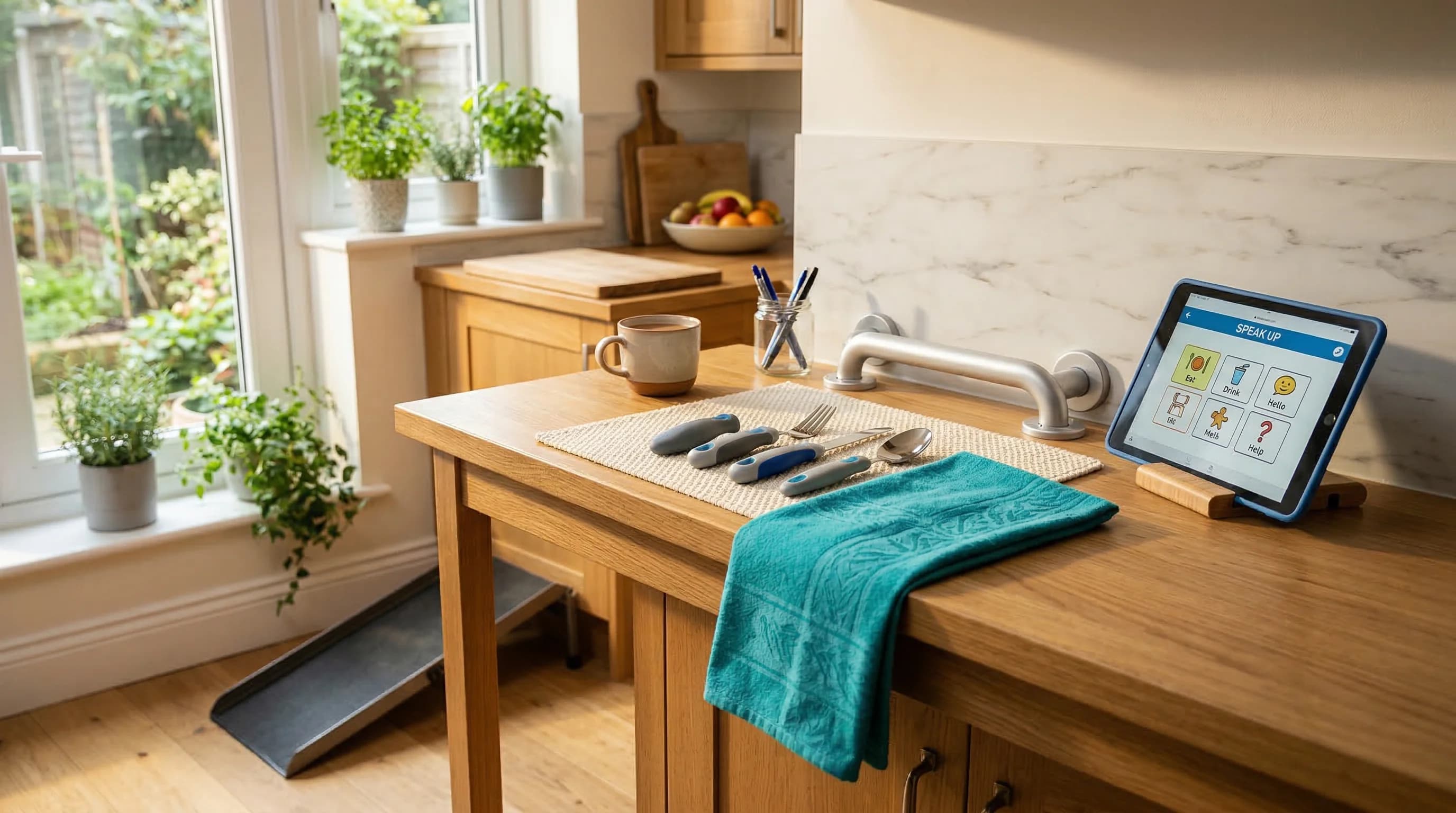
In the kitchen, adapted utensils with thick, ergonomic handles make gripping easier for people with limited hand strength or dexterity. Plate guards prevent food from sliding off the plate. Non-slip jar openers take the struggle out of sealed containers.
In the bathroom, shower chairs and stools (often available for around $150 to $250) provide stability and reduce fatigue. Toilet seat raisers make sitting and standing safer. Long-handled sponges and washing aids help people maintain personal care routines without relying on others.
Getting dressed can be one of the more frustrating daily tasks when you have limited mobility or fine motor challenges. Button hooks, zipper pulls, and sock aids are simple devices that can help you dress independently. They are small, inexpensive, and often overlooked.
Safety Items for Home
Falls are one of the biggest risks for people with mobility or balance difficulties, and many of the most effective preventive measures are surprisingly affordable.
Non-slip bath mats (around $50) reduce the risk of slipping on wet surfaces. Grab bars and rails installed near the toilet, shower, or bed provide something solid to hold onto during transfers. Transfer belts help support workers assist with standing and moving safely.
These are not luxury items. They are the kind of practical, low-cost assistive technology that can prevent serious injuries and keep people living safely at home.
Mobility Supports
Not everyone needs a powered wheelchair or a custom-built ramp. For many participants, lower-cost mobility supports make a significant difference.
Walking sticks and canes (from around $50) provide balance and confidence when moving around the house or out in the community. Rollators and four-wheeled walkers (around $500) offer more stability and often include a seat for resting. Portable ramps help with access at home or when visiting places that are not fully accessible.
The right mobility aid depends entirely on your situation, your goals, and your environment. What works in a single-storey home might not suit someone navigating public transport regularly. This is where a conversation with your support coordinator or an occupational therapist can help you find the right fit.
Communication Aids
Communication is fundamental, and there is a growing range of affordable tools that support people who communicate in different ways.
Picture communication boards — physical or laminated cards showing common words, activities, and needs — remain one of the most accessible and widely used communication aids. They are simple, portable, and effective.
Speech-generating apps for tablets and smartphones have become increasingly sophisticated. Some use symbol-based systems, others use text-to-speech. While the device itself (a tablet or phone) is generally considered an everyday item and not funded by the NDIS, the specialised communication software or app may be funded if it relates to your disability needs.
Large-print labels and high-contrast visual aids can also support daily independence for people with vision impairments, helping with everything from medication management to navigating the kitchen.
Technology Aids
Technology aids bridge the gap between standard devices and the specific ways people need to use them.
Modified keyboards with larger keys, key guards, or alternative layouts make computer use accessible for people with limited fine motor control. Screen readers and magnification software support people who are blind or have low vision to access digital content. Switch access devices allow people with significant physical disabilities to control computers and communication devices using a single switch or button.
These items range widely in cost, but many fall within the low-cost category. As the NDIS notes, what matters is that the technology directly supports your disability-related needs and goals.
How to Access Low-Cost AT Through Your NDIS Plan
One of the most practical things about low-cost assistive technology — generally items under $1,500 per item — is that accessing them is often more straightforward than you might expect.
Where the funding comes from: Low-cost AT items are typically funded through the Core Consumables budget in your NDIS plan. This is the part of your plan that covers everyday items you need because of your disability.
What you need to do depends on how your plan is managed:
- If you are self-managed, you can purchase items from any supplier — a pharmacy, a mobility equipment store, even online — and claim reimbursement through the myplace portal. Keep your receipts.
- If you are plan-managed, your plan manager pays the supplier on your behalf. You may be able to purchase from both registered and unregistered providers.
- If you are agency-managed, you will generally need to purchase from NDIS-registered providers.
For items under $1,500, you typically do not need a formal quote or pre-approval from the NDIA (National Disability Insurance Agency). However, the item must be directly related to your disability needs and align with what is in your plan.
Before You Buy: What to Check First
We always recommend taking a few steps before purchasing any assistive technology, even low-cost items.
Check your plan. Look at your Core Consumables budget and confirm you have available funding. If you are unsure how to read your plan, your support coordinator or LAC (Local Area Coordinator) can walk you through it.
Talk to your support coordinator. They can help you identify whether a particular item is appropriate, suggest alternatives you may not have considered, and confirm it aligns with your plan goals.
Consider a trial. Some providers and occupational therapists offer the opportunity to try items before purchasing. This is especially helpful for mobility aids or seating supports where fit and comfort matter.
Make sure it relates to your disability. The NDIS funds assistive technology that addresses a disability-related need. Items that most people would use regardless of disability — a standard phone case, a regular desk lamp — would not typically be covered.
For more detail on what the NDIS funds and how assistive technology is categorised, the NDIS assistive technology page is a helpful starting point.
Small Items, Real Independence
Assistive technology does not have to be complicated or expensive to be meaningful. A $50 non-slip mat, a set of adapted utensils, or a communication app can shift the balance from struggling through a daily task to managing it confidently and independently.
If you are an NDIS participant and you are not sure what is available or what your plan covers, start with a conversation. Talk to your support coordinator, your occupational therapist, or your plan manager. At Cynosure, we help participants navigate exactly these kinds of questions every day — because the small things are often the ones that matter most.